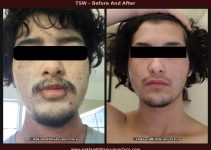
I see topical steroid withdrawal at every stage in my practice—from the early acute eruption through the long, unpredictable recovery period. For most patients, the first question is the same: is this normal? The answer is almost always yes, but understanding what “normal” looks like with TSW requires knowing how the condition tends to progress and which symptoms belong to withdrawal versus the original skin condition underneath.
This post walks through the four recognized stages of topical steroid withdrawal, the hallmark clinical signs, the two subtypes, and the key differences between TSW and an eczema flare. My goal is to give you a practical framework for understanding what is happening to your skin—and why.
What Is Topical Steroid Withdrawal?
Topical Steroid Withdrawal (TSW)—also called Red Skin Syndrome or Topical Steroid Addiction—is a rebound reaction that can develop after prolonged use of topical corticosteroids, typically mid- to high-potency formulations used daily for several months or longer. When the steroids are discontinued, the skin responds with a constellation of symptoms that often exceed the severity of the original condition.
The mechanism is not fully understood, but one leading hypothesis involves nitric oxide. Topical corticosteroids appear to suppress endothelial nitric oxide (NO) production, which reduces vasodilation. When the steroids are removed, NO levels rebound, causing the widespread erythema (redness) that defines the early stages of withdrawal. This has been described as a “trampoline effect”—alternating cycles of vasoconstriction and vasodilation that lead to excess NO accumulation and hyperdilation of blood vessels beyond their pre-steroid diameter.
There is also likely a neuroinflammatory component. A 2025 pilot study from the National Institute of Allergy and Infectious Diseases (NIAID) at the National Institutes of Health identified elevated levels of NAD+ (nicotinamide adenine dinucleotide, a form of vitamin B3) in the blood serum and skin of TSW patients, stemming from increased expression of mitochondrial complex I and conversion of tryptophan into kynurenine metabolites. These abnormalities were not found in patients with atopic dermatitis alone, suggesting that TSW has a distinct dermatopathology. The study also showed that targeting complex I with metformin or the herbal compound berberine improved outcomes in an open-label case series.
In practical terms: the skin has been chemically suppressed, and when that suppression is lifted, the inflammatory response comes back with a disproportionate intensity.
It should be noted that TSW appears to be far more prevalent in Atopic Eczema patients. That said, while more rare it can and does occur in other conditions including psoriasis, lichen planus, and seborrheic dermatitis.
The Four Stages of Topical Steroid Withdrawal
TSW does not follow a perfectly linear path—patients cycle through periods of improvement and flare—but dermatologists have identified a general four-stage progression that most cases follow. This staging model, described by DermNet NZ, provides a useful clinical framework:
Stage 1: Acute Eruption
Within days of discontinuing topical steroids (sometimes up to a few weeks), the skin erupts with intense, burning redness. This erythema (diffuse redness of the skin) is typically confluent—meaning it forms large, continuous sheets of red rather than scattered patches—and often extends to areas where steroids were never applied. Oozing, swelling, and a sensation of deep heat are common. Many patients describe this stage as the worst they have ever felt.
In my practice, patients arriving in Stage 1 often present with facial swelling (particularly around the eyes), widespread erythema across the face and neck, and in many cases fluid discharge from inflamed areas.
Stage 2: Dryness and Shedding
As the acute burning and oozing begin to recede, the skin shifts into a profoundly dry and itchy phase. Desquamation (skin shedding) can be dramatic—patients frequently report waking to find their sheets covered in flakes of dead skin. The itch can be relentless, particularly at night.
In practice, I see many patients present with features of Stage 1 and 2 at the same time, despite currently being described as separate Stages in some of the early TSW literature now available.
Stage 3: Recovery with Intermittent Flares
The skin begins to visibly improve. Redness decreases, the texture starts to normalize, and patients regain more of their daily function. However, this stage is characterized by increased skin sensitivity and intermittent flares—periods where symptoms temporarily intensify before settling again.
These flares can be discouraging, but they are a normal part of the healing trajectory. Chinese Medicine treatment seems to reduce the length and intensity of the flares. I find that patients who understand this ahead of time handle the flares with less anxiety. As the flares tend to become shorter and less severe over time, this is a meaningful clinical indicator of forward progress.
Stage 4: Resolution
The skin gradually returns to its pre-steroid baseline. For patients with underlying eczema, I typically adjust treatment to the presenting symptoms and patterns so that patients do not need to return to the full degree of eczema they had before steroid use. Without treatment, the resolution phase can take weeks to years depending on many factors. However, with treatment, I find the resolution stage to last a few weeks to a few months.
It is worth noting that recovery is rarely a clean endpoint. Some patients reach 90% resolution quickly and spend months working through the remaining stubborn patches, while others improve steadily across all areas simultaneously. In my experience, the neck, wrists, and hands tend to be the last areas to fully resolve.
Hallmark Clinical Signs
Beyond the general staging, there are several clinical signs that are characteristic of TSW and help differentiate it from other skin conditions. If you have spent time in TSW forums, you may recognize some of these terms:
The Headlight Sign
One of the more distinctive features of TSW involving the face. The skin becomes intensely red across the cheeks, forehead, and around the eyes, but the nose and the area immediately around the mouth are spared—left pale or normal-colored. Some say the visual effect resembles headlights, with the nose forming a central pale island in a sea of redness. This pattern is clinically significant because it is unusual in other inflammatory skin conditions.
The Red Sleeve Sign
Erythema (redness) of the arms and/or legs that stops sharply at the wrists or ankles, sparing the palms and soles. It looks as though the patient is wearing “red sleeves.” This is another pattern that is relatively specific to TSW and less common in typical eczema.
Elephant Wrinkles
Thickened, lichenified or “wrinkled” skin with reduced elasticity, typically affecting the extensor surfaces—the outer elbows, fronts of the knees, and similar areas. The texture can resemble elephant skin, hence the name. Lichenification is a natural response of the skin post inflammation. While lichenification is present in eczema, it is often more severe in TSW. It is still treatable and does not necessarily need to represent permanent damage if treated thoroughly and effectively.
Additional Signs
- Shedding (desquamation): Extensive flaking, particularly prominent in Stage 2
- Serous ooze: Clear or yellowish fluid weeping from inflamed skin, most common in Stage 1
- Edema: Swelling, particularly of the eyelids and face
- Thermodysregulation: Difficulty maintaining normal body temperature—patients often alternate between feeling unusually hot and experiencing chills. This is extremely common and typically improved early on
- Insomnia and mood disturbance: The combination of severe itch, pain, and altered appearance frequently disrupts sleep and emotional wellbeing
Two Subtypes of TSW
The medical literature recognizes two primary subtypes, and many patients present with features of both:
Erythematoedematous Subtype
This is the more common form, particularly in patients who used topical steroids for chronic eczema (atopic dermatitis). It is characterized by a burning sensation, widespread redness, swelling, and scaling. The burning component is often what patients find most unbearable—it is qualitatively different from the itch of eczema and often responds poorly to conventional antihistamines.
Papulopustular Subtype
More commonly seen in patients who used topical steroids for cosmetic purposes or pigmentation issues rather than eczema. This subtype presents with papules (raised bumps) and pustules (pus-filled lesions) along with redness, but tends to involve less burning, stinging, and swelling than the erythematoedematous type. It can resemble steroid-induced rosacea.
How to Tell TSW from an Eczema Flare
One of the most clinically relevant questions—and one I address frequently in consultations—is whether a patient’s worsening symptoms after discontinuing steroids represent TSW or simply a flare of their underlying eczema. The distinction matters because treatment strategy and expectations differ.
Several features point toward TSW rather than an eczema flare:
- Spread beyond treated areas: TSW commonly affects skin where steroids were never applied. An eczema flare tends to recur in previously affected areas.
- Burning over itching: While both conditions itch, the burning sensation is more characteristic of TSW. Eczema is predominantly itchy.
- Confluent redness: TSW produces sheets of continuous redness, while eczema flares tend to be more patchy and localized.
- Headlight sign or red sleeve sign: These patterns are relatively specific to TSW.
- History of prolonged, frequent steroid use: Particularly mid- to high-potency formulations on the face, neck, or genital area. Clinically, I’ve seen more than a few cases of short-term, high-potency topical steroid use on sensitive or thin-skinned areas leading to topical steroid withdrawal.
- Timing: Onset within days to weeks of stopping steroids, with symptoms more severe than the original condition.
- Thermodysregulation and systemic symptoms: Temperature instability, widespread skin shedding, insomnia, and oozing that goes beyond the typical eczema experience.
In practice, the two conditions frequently overlap—most TSW patients are eczema patients who used Topical Steroids to manage their eczema symptoms. In my TSW treatment approach, I address the most severe elements first and then as progress is made and symptoms reduce we continue to treat the eczema as it becomes the more prominent condition.
It should also be noted that there do exist severe eczema cases that present with many of the features of TSW but without much or any history of steroid use. Similarly, there do exist complications of eczema that present after stopping steroids, such as Tinea incognito, that are not TSW. Distinguishing such cases is clinically important.
What This Means for You
If you are reading this and seeing your own experience reflected, I want to be clear: what you are going through is real, it follows recognizable patterns, and it can improve. The stages are not always neat—you may cycle between them, or experience features of multiple stages simultaneously—but the general direction can be stewarded toward resolution.
Understanding where you are in the process can help manage both your expectations and your anxiety. If you are in Stage 1 and the burning feels unbearable, know that the acute phase can give way to something more manageable with proper treatment. If you are in Stage 3 and frustrated by a flare after weeks of improvement, know that flares during recovery are typical and do not mean you are starting over.
In my next post, I will discuss how Chinese herbal medicine addresses each of these stages—what the treatment looks like in practice, how herbal formulas are tailored to the shifting patterns of TSW, and what kind of timeline is realistic for improvement.
David Heron, DACM, L.Ac. is a Chinese medicine dermatology specialist at Oakland Hills Acupuncture in Oakland, CA. He treats TSW patients in person and accepts some patients in California to be seen via telemedicine.