
Topical Steroid Withdrawal (TSW) is one of the most distressing skin conditions I encounter in practice. Patients often arrive after months—sometimes years—of worsening symptoms that began when they stopped using topical steroids. The cycle of intense redness, burning, weeping, and skin shedding can be overwhelming, and many feel their condition has been dismissed or misunderstood by the providers they have seen.
If you have already made the decision to discontinue topical steroids and feel that you are suffering from significant skin flares, Chinese herbal medicine offers a meaningful treatment option. In my clinical experience, individualized herbal formulas can significantly reduce the severity and duration of TSW when treatment is timed and tailored appropriately.
What Is Topical Steroid Withdrawal?
Topical Steroid Withdrawal—also referred to as Topical Steroid Addiction (TSA) or Red Skin Syndrome (RSS)—is a condition that can develop after prolonged use of topical corticosteroids. When the steroids are discontinued, the skin may “rebound” with symptoms that are often more severe than the original condition they were prescribed to treat.
TSW typically presents in one of two recognized patterns, and sometimes a combination of both:
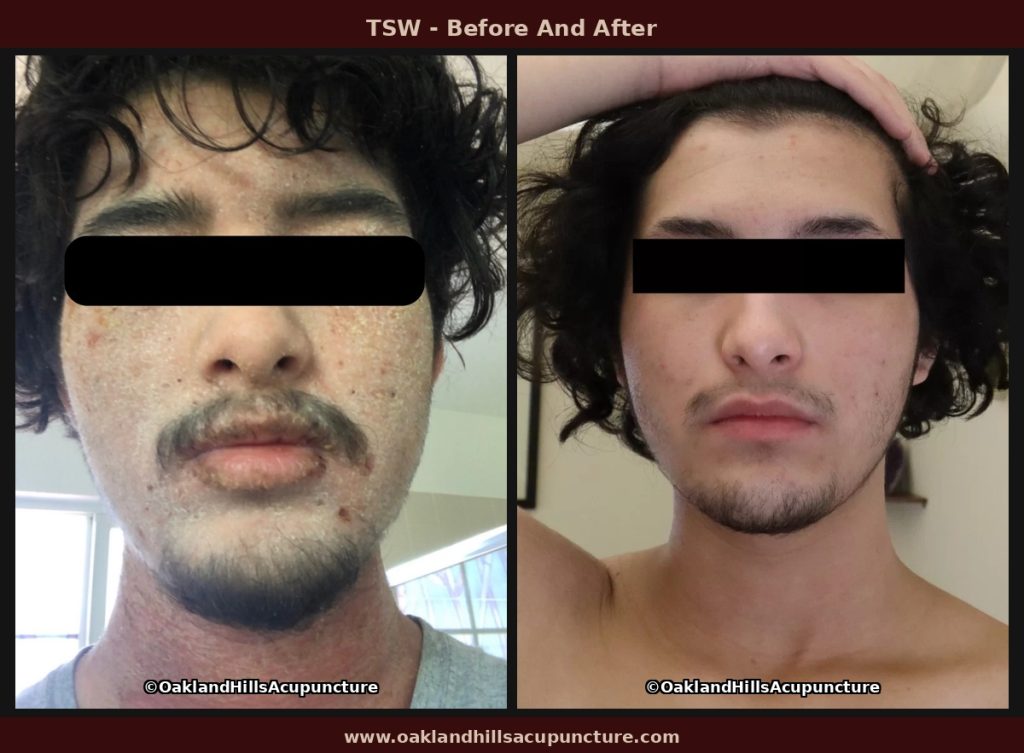
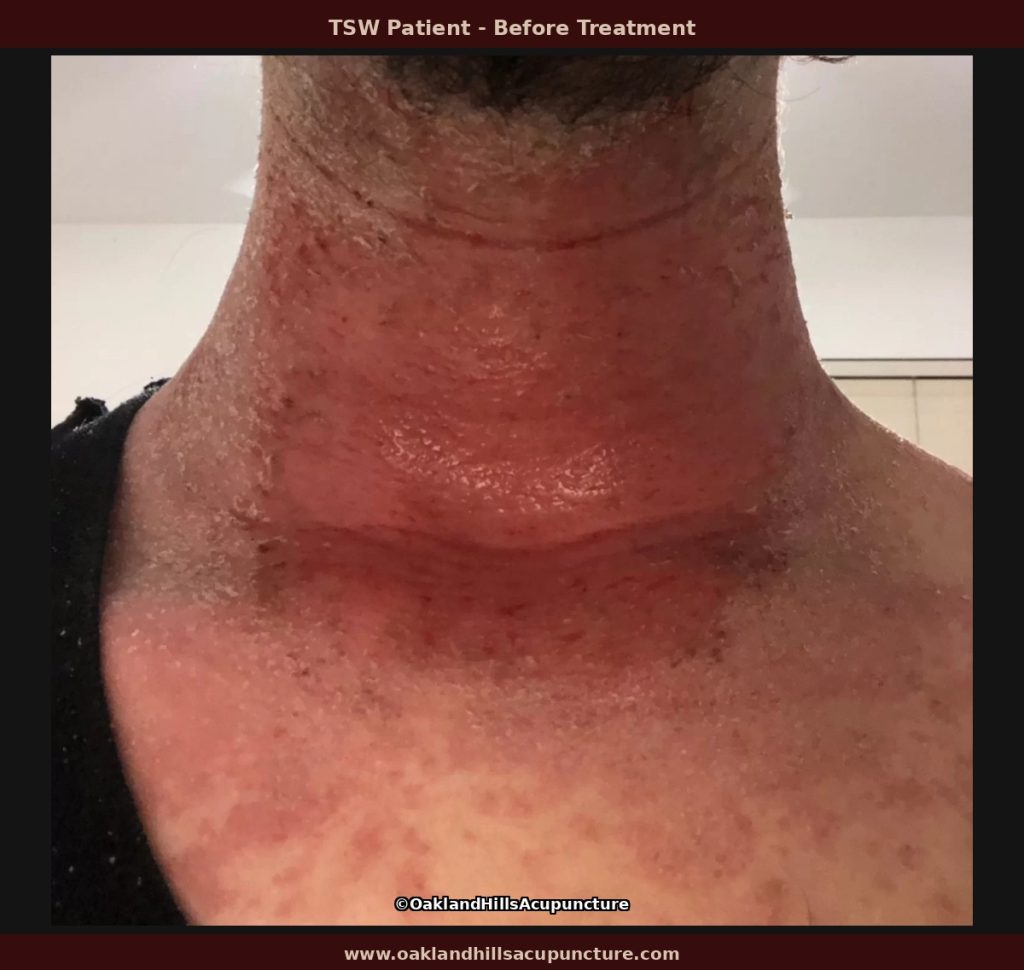
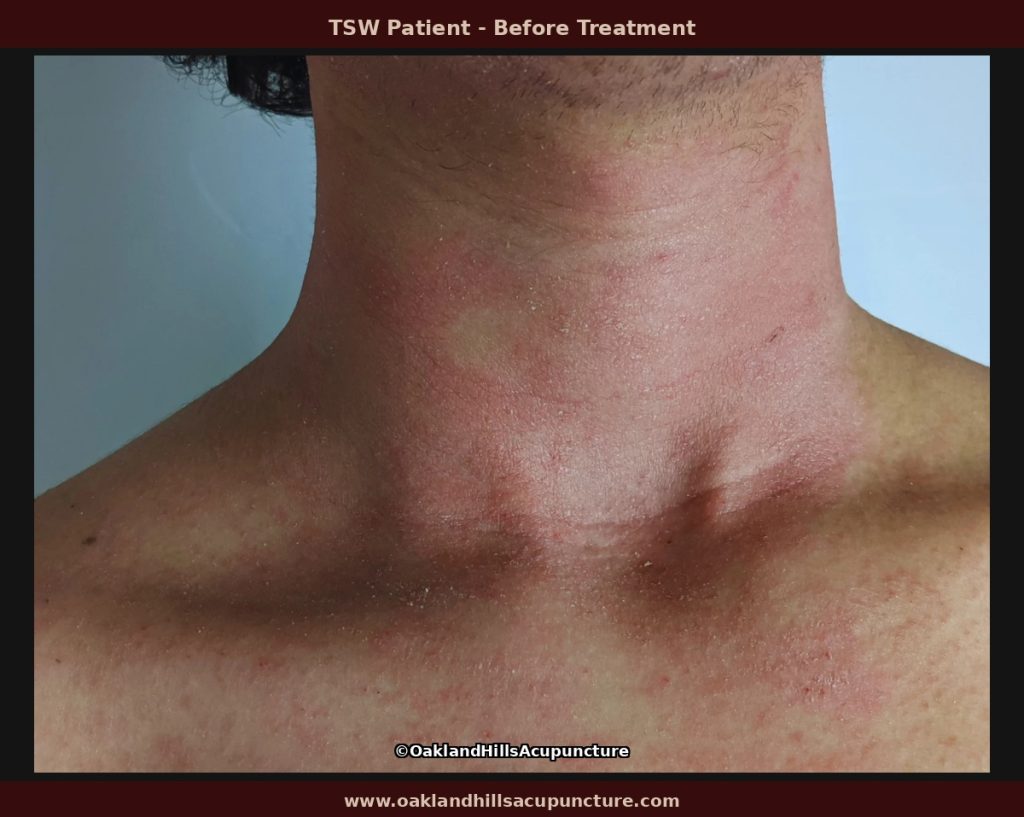
- Red Burning Type (erythematoedematous): Characterized by widespread, intense redness (erythema) that often begins on the face and spreads to the neck, chest, and arms. The skin feels hot to the touch, burns, and can become swollen. Fluid discharge (oozing) is common, and the redness typically extends well beyond the areas where steroids were originally applied.
- Papulopustular Type: Characterized by papules (small raised bumps) and pustules, often concentrated on the trunk and extremities. This pattern may be accompanied by peeling, dryness, and scaling.
Common symptoms across both presentations include:
- Deep, persistent redness that may cover large areas of the body
- Intense burning and stinging sensations
- Skin shedding and flaking—sometimes extensive, particularly in the morning
- Oozing or weeping of clear or yellowish fluid
- Severe itching, often worse at night
- Swollen, puffy eyes and face
- Disrupted sleep and significant emotional distress
- Temperature dysregulation—feeling unusually warm or experiencing chills
TSW remains a subject of debate within conventional dermatology, though awareness has grown considerably in recent years. Regardless of how it is classified, the clinical reality for patients going through withdrawal is undeniable—and in my experience, very treatable with the right approach.
A Personal Decision: My Role in the Process
Whether someone should stay on topical steroids or stop is a personal medical decision that I do not try to influence. I prefer that individuals have a clear understanding of the pros and cons of each approach, as there are valid reasons why different people may approach the situation differently.
I see my role as supporting patients who have already made the decision to discontinue using topical steroids, not to push them toward stopping, as it is a personal decision. Most patients who come to me for TSW treatment have already fully decided to stop topical steroids.
Why 2–3 Weeks Off Steroids Are Required Before Treatment
Whether a patient will experience a brief steroid rebound or begin developing full topical steroid withdrawal can only be determined once the skin has been off topical steroids and other topical prescription drugs for a period of time. For accurate diagnosis and treatment planning, I require a minimum of 2–3 weeks without any topical steroids or prescription creams before starting herbal therapy.
What This Window Allows Me to See Clinically
This time frame is not about reaching a new baseline. In fact, many patients would continue to decline if left untreated. Instead, these early weeks allow enough clarity to see the true underlying direction of the condition once pharmaceutical suppression is removed.
TCM dermatology works for TSW because treatment is individualized. To tailor herbs correctly, I need to assess the actual, unsuppressed presentation of the skin and the overall systemic state. This includes evaluating:
- The degree and distribution of redness
- Dry, flaky, weeping, or crusting areas
- Involvement of the face, neck, ears, scalp, groin, and underarms
- Presence and frequency of oozing
- Nighttime itching or itch attacks
- Warmth or cold sensations (whole body or localized)
- How much skin shedding is present in the morning
These findings determine the herbal strategy, category, and dosage.
Why This Stage Can Be Difficult
This waiting period can be understandably difficult. For some, symptoms worsen quickly after stopping steroids, and that can be emotionally challenging. But this pattern is exactly what I need to evaluate so I can treat the underlying factors appropriately.
To be clear: I have seen very positive outcomes in patients who come to me after deciding to discontinue topical steroids. However, attempting to start herbs first and then stopping steroids later does not reliably prevent the rebound reaction—and in my experience, the false hope tends to make the scenario more emotionally challenging. Herbal treatment for TSW works best at least 2–3 weeks following the last dosage of topical steroids, oral steroids, and/or other topical prescription treatments.
How I Treat TSW with Chinese Herbal Medicine
My primary treatment for TSW is individualized oral Chinese herbal formulas, prescribed as concentrated granular extracts taken two to three times daily dissolved in hot water. The formula is tailored to your specific presentation and modified at each follow-up visit as your condition evolves.
TCM Pattern Differentiation in TSW
In Chinese Medicine, TSW does not fit a single diagnosis—it is a complex presentation that often involves multiple overlapping patterns. Common patterns I see in TSW patients include:
- Fire Toxin: Intense redness, burning, and heat—often the dominant pattern in the acute phase of withdrawal
- Heat in the Blood and Ying Level: Deep erythema, restlessness, disturbed sleep, and a sense of internal heat that radiates to the skin surface
- Damp Heat: Oozing, crusting, and swelling, particularly in the flexural creases, groin, and behind the ears
- Blood and Yin Deficiency: Extreme dryness of the skin that typically becomes more prominent as the acute phase subsides
The specific combination of patterns—and how they shift over time—determines which herbs are used and in what proportion. This is why individualized treatment is essential. A formula that addresses Fire Toxin and Damp Heat in the acute phase will look very different from a formula aimed at nourishing Yin and Blood during the later dry phase.
Three Phases of Treatment
Treatment generally follows three phases, though the boundaries between them are not always distinct:
Phase 1 — Clearing: In the acute phase, the priority is to clear Heat, resolve toxicity, and reduce inflammation. Patients often notice improvements in heat sensation (especially evening heat), burning, and sleep disturbance within the first two to four weeks. Those with weeping typically see this reduce as well.
Phase 2 — Harmonizing: As the acute heat and oozing subside, the formula gradually shifts visit by visit, taking into account other issues such as dryness. As the patient progresses, the formula also begins to address hyperpigmentation. This phase supports the skin’s recovery and helps stabilize the improvement.
Phase 3 — Consolidation: Once the skin has substantially cleared, a lighter formula supports the body’s constitution and aims to prevent relapse. This phase is important for long-term stability and is something I encourage patients not to skip.
What to Expect During Treatment
Setting realistic expectations is essential. TSW is a complex condition, and while Chinese herbal medicine can significantly support the process, it is not an overnight solution.
What Herbal Medicine Can Help With
- Reducing heat, burning, and inflammation
- Easing itch and improving sleep
- Decreasing oozing and discharge
- Calming large-area redness
- Supporting skin-barrier repair
- Addressing the underlying constitutional factors
What Herbal Medicine Cannot Do
- Reverse symptoms overnight
- Reliably prevent all symptoms of a rebound effect after stopping steroids
- Eliminate all discomfort in the early stages of treatment
Realistic Timeline
Every case is different, but the following reflects a general pattern of improvement for patients who follow their herbal plan consistently (the timeline will vary):
- Weeks 2–4: Improvements in heat, sleep, and some visible changes on the skin. Many patients notice the burning and nighttime itching begin to reduce. Weeping typically reduces as well.
- Months 1–3: Significant reduction in redness, oozing if any was left, and flaking. Flares become less frequent and less intense. The skin begins to stabilize.
- Months 3–6: Continued clearing, with the skin approaching a stable state. Post-inflammatory hyperpigmentation begins to fade.
- Months 5–12: Consolidation and ongoing support. The overall treatment course for most TSW cases falls within this range, with the goal of significant remission of lesions and affected areas.
Initial visits are typically every two weeks, gradually extending to three weeks as the skin stabilizes. In the consolidation phase, visits may be once per month. Compliance with the herbal formula is important—the herbs work best when taken consistently as directed.
My Results with TSW Patients
For patients who have fully discontinued topical steroids and other topical prescription treatments, completed the 2–3 week observation period, and followed their herbal plan consistently, I have seen exceptionally encouraging outcomes. These include not only decreased heat and nighttime burning, decreased redness, more stable skin, fewer flares, improved sleep, better moisture balance, and reduced oozing but a return to normal life: working, studying, etc like they once did.
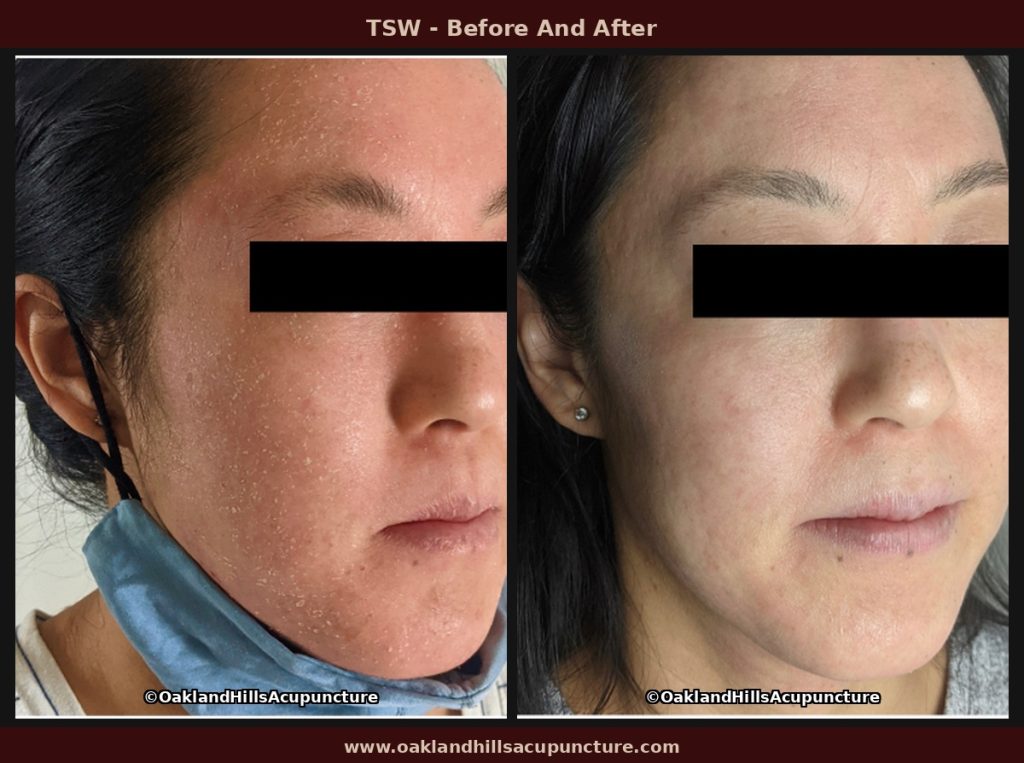
In one case I oversaw treatment for, a patient with lifelong eczema that was later complicated by TSW presented with deep erythema of the face and neck, swollen eyes, fluid discharge, and large inflamed lesions across the upper back and abdomen. Over the course of approximately four months of individualized herbal treatment, 95–98% of lesions cleared. The shoulder and abdominal lesions healed first, followed by steady improvement of the face, which is often the slowest area to respond.
Every case is different, and I want to be honest about that. Some patients respond rapidly, while others with more complex or long-standing conditions require a longer course of treatment. During treatment, I am straightforward with you about what I observe and what I expect. You can read detailed case write-ups on my TSW Case #1 page and in my published articles on the Mayway website.
TSW and Eczema
Most patients experiencing TSW also have an underlying eczema condition—after all, topical steroids are most commonly prescribed for eczema in the first place. Distinguishing between symptoms of TSW and symptoms of the original eczema is an important part of the diagnostic process and influences treatment strategy.
In my treatment approach, the most severe elements of the presentation are treated first, typically these are the redness, burning, intense itch, etc of TSW. As these settle we continue to treat the eczema. In reality, where one starts and the other ends are difficult to draw a fine line, but the goal is to treat it all and restore the health and vibrance of the skin. For more on how I treat eczema specifically, visit my dedicated Eczema Treatment with Chinese Medicine page.
However, TSW is not limited to eczema patients. I have treated TSW patients who originally used steroids to treat Lichen Planus and Psoriasis. Also, even with eczema alone, there are cases of severe eczema that cannot be attributed to steroids, often because they rejected their usage. Severe eczema of this nature can be treated with TCM the same as TSW with the main difference being timeline expectations.
My Training and Background
I hold a Doctorate of Acupuncture and Chinese Medicine (DACM) and am a licensed acupuncturist (L.Ac.) and NCCAOM Diplomate. My focus on dermatology within Chinese Medicine is the product of years of specialized study, including completing Dr. Mazin Al-Khafaji’s TCM Dermatology Diploma Course twice amongst other TCM dermatology trainings. I am listed in the International TCM Dermatology Association (ITCMDA) practitioner directory.
TSW is one of the more complex presentations I treat, and it requires a practitioner who understands both the biomedical nature of steroid withdrawal and the TCM patterns that drive it. I have treated a range of TSW cases—from mild to severe—and have written and published on the topic. My practice is located in the Oakland Hills and I see TSW patients from throughout the East Bay, including Berkeley, Alameda, San Leandro, Walnut Creek, and the greater Bay Area. If you are navigating TSW, having a practitioner with specific experience in this area can make a meaningful difference in your treatment trajectory.
Frequently Asked Questions
TSW is a rebound reaction that occurs after discontinuing topical steroids, whereas eczema is usually the underlying inflammatory skin condition. TSW often produces symptoms that go beyond the typical severity of eczema—widespread redness, burning, oozing, and skin shedding that may affect areas where steroids were never applied. The two conditions can overlap, and distinguishing between them is an important part of developing an effective treatment plan.
While I am unable to treat patients currently using topical steroids, whether you decide to stop their usage or not is a personal decision to be made on your part, possibly with the guidance of the prescribing physician. If you have already stopped, I ask for a minimum of 2–3 weeks off all topical steroids and prescription creams before our first herbal consultation, so I can accurately assess your skin’s unsuppressed presentation.
Treatment duration depends on the severity of the withdrawal, the length of prior steroid use, and individual factors. Most TSW cases require 4–12 months of treatment. Some patients see significant improvement within the first few weeks, while complete stabilization may take longer. I set honest expectations from the outset and keep you informed throughout treatment.
I am able to consult with patients who are in the process of tapering, but herbal treatment begins after you have been fully off topical steroids and prescription creams for at least 2–3 weeks. This ensures I can assess the true presentation and prescribe appropriately. We can discuss your situation and timeline during an initial conversation.
Yes. I treat children with TSW, and for children older than 2 who can take oral herbs, formulas are adjusted for age and weight. For younger children, topical herbal preparations such as baths and washes may be used as part of the treatment plan to start and oral herbal medicine may be added later.
The herbs are dissolved in hot water and can be quite bitter—particularly the cooling, bitter Heat-clearing formulas used in the acute phase of TSW. Most patients adjust within the first week or two, and the motivation of seeing their skin improve tends to make the taste easier to tolerate.
Dermatology consultations are $185 for the initial visit and $100 for follow-up visits, plus the cost of the herbal formula. The herbs typically run between $40 and $60 per week, depending on the complexity of the formula and the dosage prescribed. Telemedicine initial visits are $200 and follow-ups are $130, plus the cost of herbs.
Yes. I see TSW patients via telemedicine throughout California and can ship herbs directly to you. Detailed photographs of the skin are essential for telemedicine dermatology consultations, and I will guide you on what to photograph and how. California residents who live too far to come in regularly are also welcome to come in person on occasion with the core of their regular visits being via telemedicine – it can be very helpful to see the patient in person at the onset of TSW treatment.
Schedule a Consultation
If you have already discontinued topical steroids and are looking for herbal support during the withdrawal process, I welcome you to schedule a consultation. I see patients in person at my Oakland Hills office and via telemedicine for patients throughout California. During your first visit, I will take a thorough history, examine your skin, assess your overall health from a Chinese medical perspective, and discuss a treatment plan tailored to your specific presentation.
Please visit the Medical Disclaimer page for important information regarding the content on this website.